

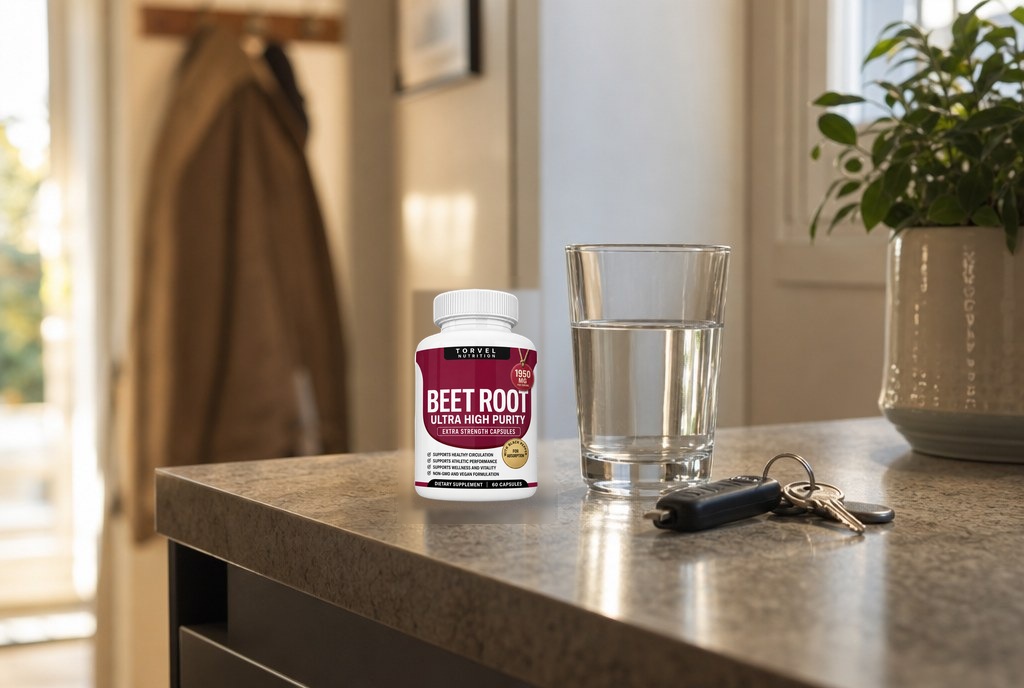
It Usually Starts With Somebody Else's Recommendation
The pattern repeats often enough to be worth describing. A woman hears about beet root, usually from someone on her feed rather than from an advertisement, buys a bottle, and leaves it where her partner will find it.
What she is buying is not complicated. Beet root is a vegetable extract, it is one of the richest dietary sources of nitrate, and nitrate is what the body uses to make nitric oxide. Nitric oxide is the signal that tells blood vessels to relax and widen.
Everything else that gets talked about downstream of that, in the bedroom and at work and in the gym, is circulation. That is the single mechanism underneath all of it.
Beets are among the highest-nitrate vegetables measured, and dietary nitrate is a precursor to nitric oxide.

The Reason Most Of Them Actually Bought It
Partners are direct about this in the comments and it is worth being equally direct here. The most common reason a woman buys her partner beet root is sexual performance.
That is a reasonable thing to buy for, because an erection is a blood flow event. Blood has to arrive faster than it leaves, and that depends on the arteries widening on demand, which is nitric oxide's job. A man whose nitric oxide production is low will notice it there before he notices it anywhere else.
It is also why partners describe a change over weeks rather than the same night. Nitrate builds a supply. It is not an on-demand pill and it does not behave like one.
Erectile function depends on nitric-oxide-mediated relaxation of vascular smooth muscle in the penile arteries.
The Second Reason Is Energy Through A Long Shift
The other reason that comes up constantly is work. Partners of men doing labour jobs, overnight shifts and doubles describe the same thing: he has more left at the end of the day than he used to.
The mechanism is the same one. Wider vessels move oxygen to working muscle more easily, and the research on dietary nitrate in exercise is built on exactly that measurement. It is not a stimulant and it contains no caffeine, so it does not produce a spike and it does not interfere with sleep at the end of a night shift.
This is the part that makes it an easy thing to keep buying. The bedroom reason gets it into the house. The work reason is why he keeps taking it.
Dietary nitrate has been studied for its effects on oxygen efficiency during exercise.

Why The Capsule Is The Version That Gets Taken
A bottle of beet juice in the fridge gets drunk twice and then sits there. That is not a discipline problem, it is a taste and sugar problem: an eight ounce serving runs to roughly a hundred calories and can carry up to about fifteen grams of sugar, and most people do not like the taste of beets.
Raw beets have the same issue with an added one. Nitrate content varies substantially between one beet and the next depending on soil, season and cultivar, so even a man who eats them is not getting a consistent dose.
A capsule has no taste, no sugar, no calories and no preparation, and the dose is identical every day. That is the entire reason it survives in a lunch bag when the juice did not survive in the fridge.
Beet juice calorie and sugar figures are from USDA FoodData Central. Vegetable nitrate content varies widely between samples.
What To Look For On The Label
Two numbers decide whether a beet root product is worth buying, and both are on the back.
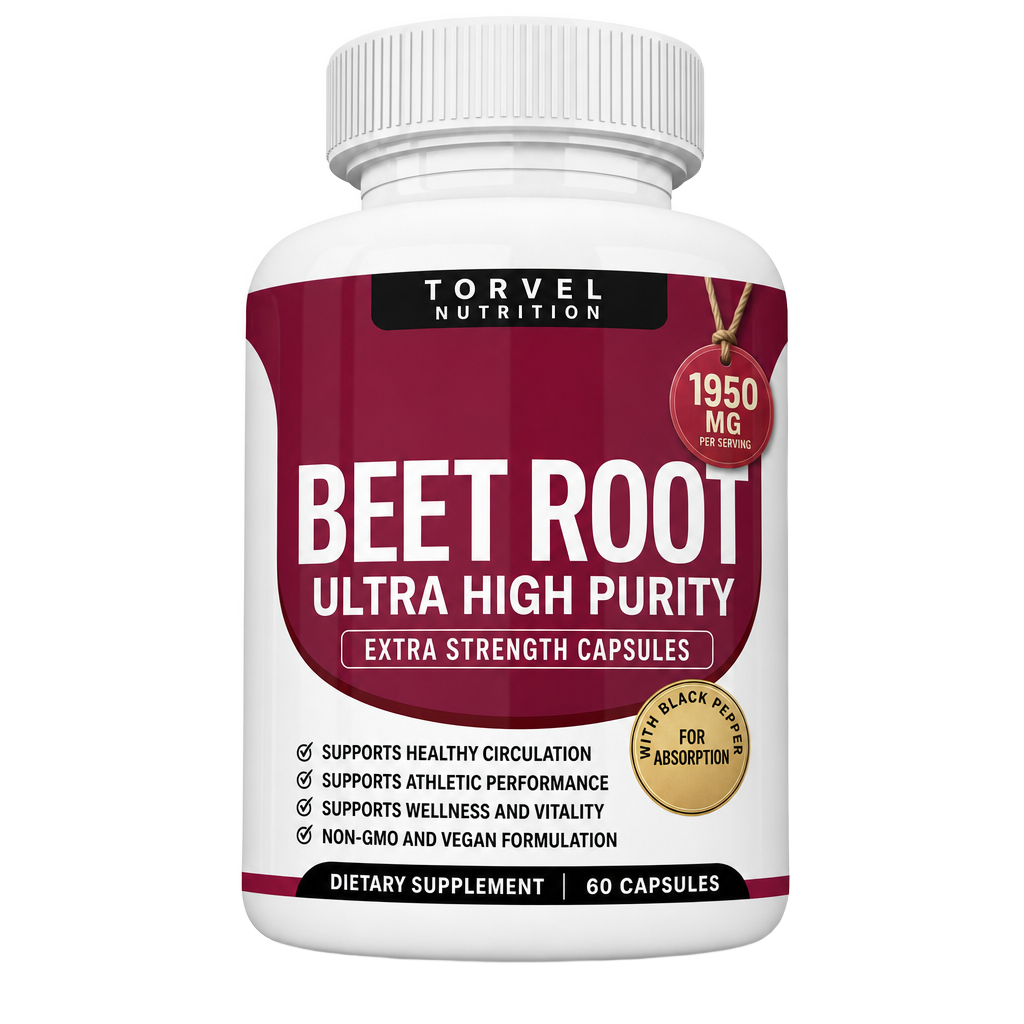
The first is beet root per serving. Torvel Beet Root is 1,950 mg per two-capsule serving. The second is whether anything is included to help absorb it. Torvel includes 15 mg of black pepper extract, and piperine, its active compound, is well documented to raise the bioavailability of compounds taken alongside it.
It is third-party lab tested in the USA and made in an FDA-registered facility, with a 30-day money back guarantee. Two capsules with water, once a day. Most partners describe the second or third week as the point where it is worth judging.
Piperine is documented to increase the bioavailability of co-administered compounds.
